TWENTY YEARS ON, WHY ‘THE DOCTOR’ IS STILL THE ROLE MODEL BOYS AND MEN NEED
Last week the BBC put Doctor Who out to competitive tender. Russell T Davies has stepped away, the Christmas special is gone, and after twenty years the new era of the show is, for now, over. Which feels like exactly the right moment to say why the Doctor raised me better than most.
The headline reads like a death notice, but it isn't one. On 10 June the BBC confirmed it would put Doctor Who out to competitive tender — the whole show, theme tune and TARDIS and all, up for grabs to whoever makes the strongest bid. Russell T Davies, the man who resurrected the series in 2005 and again in 2023, has stepped away. The Christmas special he was writing has been quietly shelved. After twenty years, the era we came to call "new Who" has reached its full stop.
I felt that full stop more than I expected to. Because I didn't just watch Doctor Who. I was raised, in part, by it.
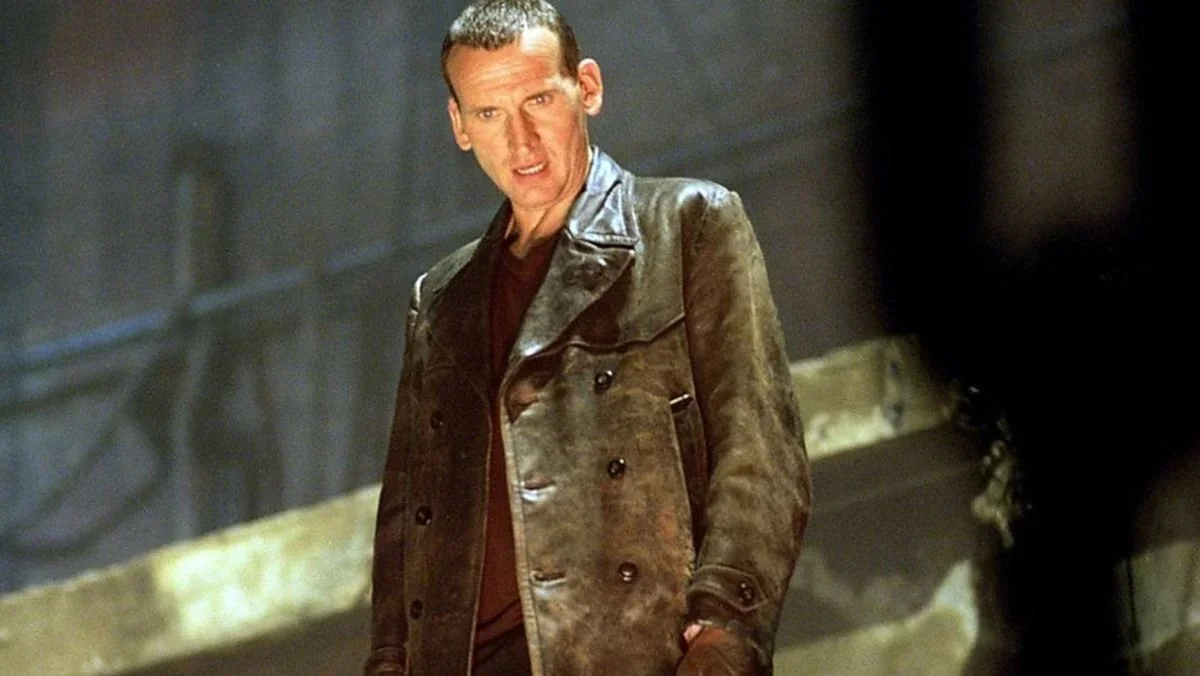
Every Saturday, seven o'clock, the three of us — my mum, my sister and me — in front of the television. Before that came the ritual of getting there: the walk to the newsagent to collect the latest DVD from whatever promotion was running that month, the small thrill of a new disc in its paper sleeve, the sense that you were assembling something episode by episode, a collection that meant something. We watched them all. Eccleston in his leather jacket. Tennant in his long brown coat, running. That Saturday-night theme tune is, to this day, one of the most comforting sounds I know.
In the week since the announcement I've been thinking about why a man with two hearts and a blue box mattered so much to a boy growing up. And I've landed somewhere I didn't expect: that the Doctor might be the finest role model a young man could be handed. We argue endlessly now about what a man is supposed to be. The Doctor answered the question decades ago, quietly, every Saturday at seven.
Here is what he taught me.
1. He is free
The Doctor goes anywhere, any-when, beholden to no one. He has seen the birth of stars and the end of worlds, and he carries that vastness lightly. To a boy, independence can look like one of two things — loneliness, or swagger. The Doctor models a third: self-possession. He is comfortable in his own company and genuinely curious about everyone else's. He doesn't need permission to be himself, and he doesn't need an audience either. That is a quieter, sturdier kind of freedom than the one young men are usually sold.
2. He will make enemies for the right reasons
The Doctor does not soften his convictions to keep the peace. He stands in front of the powerful — Daleks, Cybermen, prime ministers, gods — and tells them no, and he does it knowing it will cost him. He plants his flag and refuses to shrink from the opposition that follows. For a young man learning that being liked and being right are not the same thing, this is everything. Courage isn't the absence of fear of consequence. It's speaking anyway.
3. His mind is his weapon
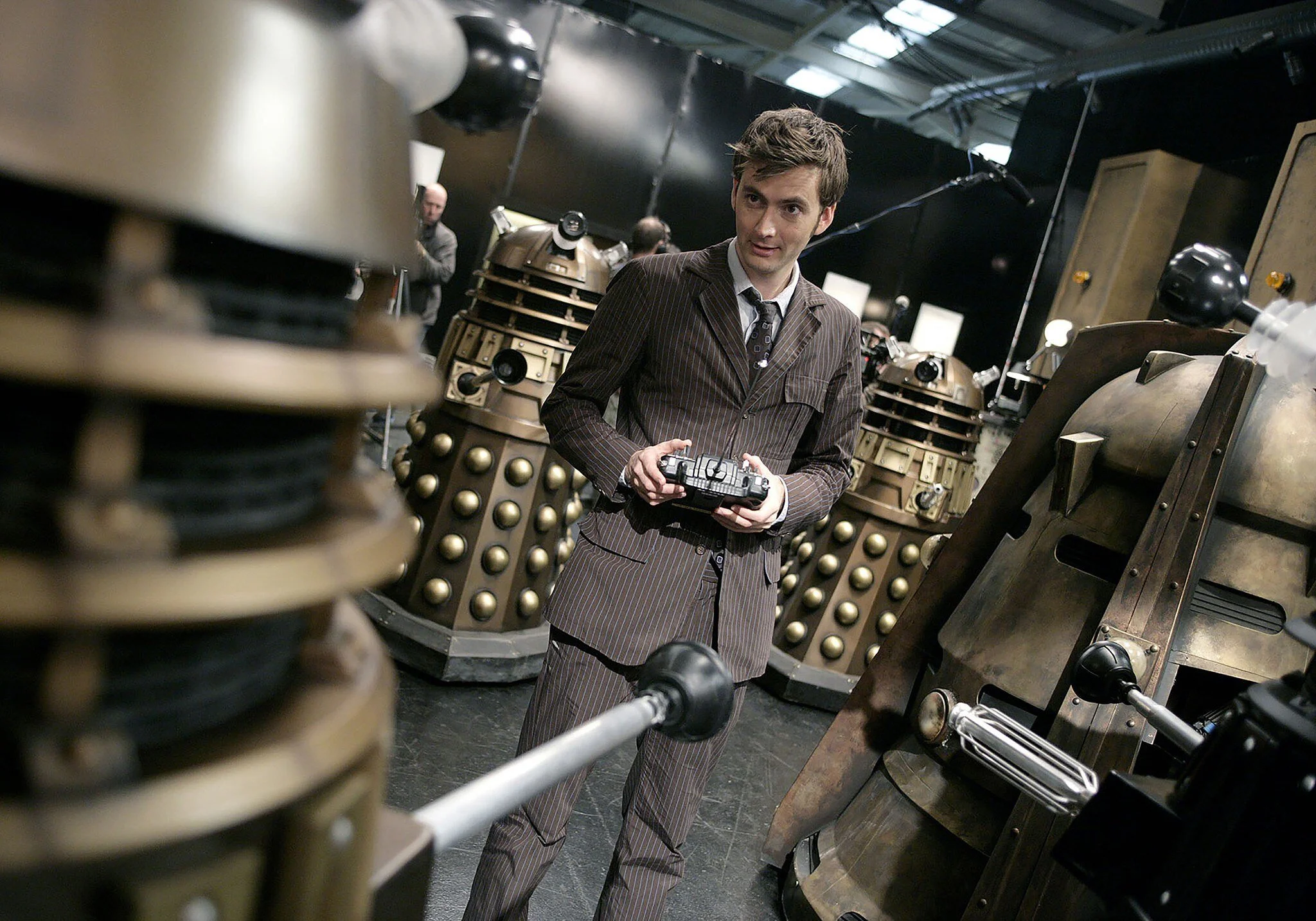
This is the one that shaped me most. The Doctor almost never carries a gun. He walks into the worst rooms in the universe armed with nothing but his intelligence, his curiosity and his nerve — and he wins. He talks his way out. He thinks his way through. He notices the thing no one else noticed. In a culture that still too often mistakes manhood for force, the Doctor insists that the cleverest person in the room can also be the bravest, and that knowing things is not soft. It is the sharpest blade you will ever own.
4. He stands between the strong and the small
Wherever the Doctor lands, he finds the people no one is protecting — the overlooked, the frightened, the powerless — and he puts himself between them and the thing that would hurt them. He treats a terrified shop assistant and a galactic emperor with precisely the same seriousness. The measure of a man, the show keeps insisting, is not how he treats those above him but how he treats those with no power over him at all.
5. Your wounds do not get to write your story
The Ninth Doctor arrives broken. He carries the guilt and grief of the Time War, a survivor of something unspeakable, and his whole journey is one of slow healing — of being coaxed back toward hope, mostly by the people who choose to travel with him. The Tenth Doctor inherits that wound and keeps wrestling with it, sometimes winning, sometimes losing badly. Neither of them pretends to be fine.
That, to a young man, is the real gift. Here is a hero who is allowed to be hurt. Allowed to grieve. Allowed, sometimes, to fail at carrying it — and still he is kind, still he is good, still he goes on. The trauma is part of him. It is not the whole of him. It does not get the final say.
6. HE MEETS THE MONSTERS LAUGHING
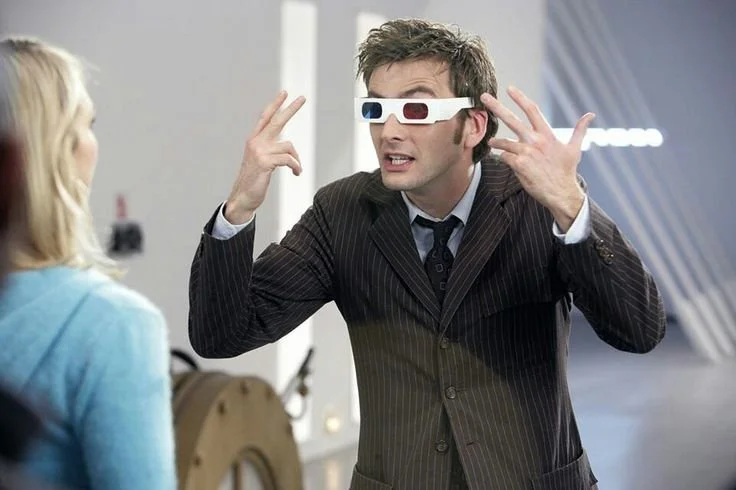
And here, for me, is the one that ties the whole knot together — the most quietly profound of the lot, and the most Tenth-Doctor of all of them. Even at the edge of the world, even with the Daleks and the Cybermen massing and reality coming apart at the seams, he will not be solemn about it. He rocks up in a pair of cheap red-and-blue 3D glasses, grinning, and launches into a monologue, treating the end of everything like a dinner party he has decided to enjoy anyway. The stakes could not be higher. His refusal to take them too seriously is total.
For years I read that as bravado. I don't anymore. I think it is the deepest thing the show ever smuggled past us in plain sight: that humour is not the opposite of seriousness — it is the antidote to despair. You can be terrified and still be funny. You can be grieving, and the Tenth Doctor is always, somewhere, grieving, and still find the joke that keeps the room from tipping into terror. The laughter is how he stays human in the face of the inhuman. It is, quite literally, his best medicine.
There is a teaching often laid at the Buddha's feet: that the finest mantra of them all is simply ha ha ha — that a true, helpless laugh is its own kind of prayer, the sound of a mind that has stopped clinging and finally let go. Whether or not the Buddha ever said the words, the Tenth Doctor lives them. He stands in front of the things that ought to break him, and he laughs, and the laugh is not denial. It is defiance. It is the most spiritual weapon he owns — and it taught a boy on a sofa that the bravest thing you can do in a dark moment is refuse to let it take your joy.
Vworp, vworp
Which brings me back to the tender, and to the strange comfort I've found in it.
Because if there is one thing Doctor Who has always understood, it is that an ending and a death are not the same thing. The Doctor changes face. He sheds one body and one voice — he has worn many of them now; many faces, many manners, once even a woman's — and becomes someone new, and the story carries on, different and uncertain and alive. "It's all up for grabs," Davies wrote on his way out the door, and he sounded delighted about it.
So this isn't a eulogy. The show I grew up with is regenerating, the way it always has, the way it taught me a person can. Someone new will take the keys to the TARDIS. The theme tune may change. The blue box may go. But the thing at the centre of it — the free, brave, brilliant, kind, wounded, unbreakable heart of it — is exactly what I would want any young man to grow up watching.
Allons-y. One more time.
