The Boys Who Sold Their Bikes: An Essay On Protest, Memory And A Place Called Boyzy (Aug, 2025)
This week marks ten years since our expedition to India - a two-week intensive, educational expedition across Uttarakhand, New Delhi, Agra, and the green foothills of the outer Himalayas.
This story isn’t as prosaic or straightforward as it might first seem.
Long before ‘Immigration Street’ and ‘Love Productions’, there was love, resistance, protests, and a youth centre called Boyzy.
To understand it, though, I have to go back - into community history, into a highly controversial national documentary of my neighbourhood, into an unpublished essay of 1987, and into the hidden community figures that played a part in this journey.
This is the never before told story.
Ten years on.
Enjoy.
EXT. BRINTONS ROAD. NEWTOWN - SOUTHAMPTON. DAWN
It’s 6am.
Friday.
21st July.
2013.
The longest day of the year.
The day starts early in Newtown, and I wake early to the sharp echoes of an argument that’s been steadily escalating for the past ten minutes across the road.
There is an energy in the air this summer. An imperious spirit that has been ‘moving in the air above and in the earth below’1 calling people out into adventure.
Blurred Lines is a chart juggernaut, and B.O.B’s ‘So Good’ is still, a year later, in the cultural bloodstream - downloaded onto LG Cookies and BlackBerrys, rewound on tinny speakers played out loud on the back of the bus, under flickering sodiums, or in small circles of friends as they sit cross-legged on the graffitied apparatus of the local ‘adventure playground’.
Like some incantatory sixteenth-century spell, the heat casts a caustic effect over the inner city - boiling tensions to the surface and stripping people of inhibition.
The argument continues to fray. A few curtains now twitch in the early light as reticent neighbours stand in the alcove of their terraced homes, biting their nails, involuntarily casted into the standing boxof this twenty-first century colosseum where sun-scorched drug-addicts perform their morning sermon of slurs and curses.
The addicts have been more prevalent this summer. They aimlessly circle the block, swaggering forward with an odd blend of menace and theatre, as if guided by one hive-mind. Their dealers are a few years older than me - local boys from St Mary’s and Newtown. Neighbours, Acquaintances, and in a few years, friends. Young men in search of adventure, status, and extra cash - by any means necessary.
Despite the inflammationof the situation, there is a humour to the whole act.
Constable King will arrive on the scene soon after - a spindly, tall, figure, with an aquiline nose, and a distaste for kids - followed by an entourage of three cars that, ever since the mandated ‘safer streets’ initiatives of the following summer, crawl the neighbourhood like great whites looking for prey.
The two men will bark the same threats for a few more minutes - threats that float harmlessly through the air, and threats that, for all their venom, will never be acted upon.
They promise war. But no one's ever seen them fight.
And in Newtown, it’s just another normal day at the office.
EXT. CORNER SHOP. NEWTOWN - FIVE HOURS LATER.
11am.
twenty-three degrees.
And the sun has agitated everyone into action.
Music from a hundred languages blasts from car windows as the older boys show off rental whips with laps around the block.
Outside Rafique’s and the chicken shops, the younger boys gather - perching on bikes and hunched on low brick walls, dissecting the day’s neighbourhood politics: Who’s moving mad. Who’s making money. Who’s just come back from jail. And which girl’s been seen with who.
There is bravado in the air. But also boredom.
My neighbourhood was built in the crook of the city’s arm.
Founded in the mid-1800s by Jonas Nichols - a local furniture-maker and upholsterer - who, as reported in the October 9th 1880 edition of The Southern Reformer, relocated to a premise at 98, St. Mary's Street and, following The American War, began to take an active interest in liberalism and politics.2
“Having lived among the people, he well knew how badly they were housed,” the unknown author of the article wrote, “and the opportunity presenting itself, he determined to secure a piece of land then in the market and build some convenient dwellings suitable for working men and their families.”3
Brick by brick, street by street, Nichols’ promise of homes for working-class families trying to carve out something better soon became a reality.
And with his housing project just a convenient mile away from the shores of the Mayflower docks, the neighbourhoods of Newtown and Saint Mary’s (often spoken as one) soon became home and pit-stop for shipmen and sailors of cruise-liners and most famously, the RMS Titanic.
A quick search through Southampton City Council’s “Titanic Street Index”, further corroborated by several independent directories, highlights these working-class neighbourhoods as the epicentre of RMS Titanic’s hiring.
James Carter, Herbert Christmas, Ernest Ford, and Roland Fredrick Mantle are just four of the registered crewmen of RMS Titanic who lived in Nicholstown - all sharing the common thread of residing on Brinton’s Road⁴- the very road I grew up on.
Despite bearing the brunt of the 1912 tragedy, with entire streets losing dozens of men from the same families, Newtown carried on.
The migration of 19th-century migrants - first driven by rural poverty and famine, later by conflict and religious persecution - brought waves of Irish navvies, German craftsmen, Jewish rag-trade workers, and lascars into British port cities. They settled in working-class enclaves around docks in Southampton, often living in crowded lodging houses and above shopfronts, before moving into areas like Newtown.
These mixed communities lived side-by-side - rebuilding their lives with their hands, mouths, and spirit. Yet by the 1960s, that dream was bruised.
The red-light district label stuck to it like gum on the pavement. Crime moved in where funding moved out and, with rising tensions, and with a ‘notoriety [which was] known around the world’4, the people of Newtown soon rallied together, deciding enough was enough.
“More than 2,000 people, from all backgrounds, joined forces for the March of Neglect.”, reported the Southern Daily Echo.“It began in Derby Road, went on through the winding streets of Newtown and Nicholstown, picking up more and more protesters along the way, before ending up for a rally outside the Civic Centre.”5
Ahmed Shah Moied, a member of the Muslim Council of Southampton, and the city's Council of Faiths recalls the first words of his speech delivered to civic leaders and MPs who had agreed to listen to demonstrators.
"I said: 'Ladies and gentlemen, when God ordered Let There be Light when he created the Earth, it must have been ignored by this city. In the daytime you cannot see anything because the trees are so overgrown and no light can get in and at night-time the lamp posts don't work'. 6
“The prostitution was the worst problem”, Ahmed shared. “I was living in the area and sailors would come from the ships down there every day. Every other house had a red lamp in the front window.”
Queen Elizabeth II soon came. Cameras rolled. And according to a later report, a half a million grant was injected into the neighbourhood to alleviate the issues.
It seemed action was taken. But did change ever really come?
In 1987, Yasmin Rosita Kelly’s essay titled ‘My Street’, centring around Northumberland Road in the neighbourhood of Newtown, provides a glimpse into the the collective efforts going on by residents, without the aid of external agencies, almost thirty years after the first protests.
It’s one of few written sources, perhaps the only one, where we are given a resident’s impression of the area they are living in:
“The residents in my street are all sorts: Jacks of all trades, students, families, single, New Age travellers, hippies, old aged, dispossessed, possessed, depressed, conventional and determinedly unconventional inhabit this ever-living street [...] Spring heralds the emergence of my street to a few gardening devotees. The green fingered, organic brigade work hard to bring living colour to the monotonous neighbourhood. Their cosseted patches are lovingly nurtured and precisely potted [...] These gardens, heady with the fragrance of sweat peas and roses are a living testimony to the rural ideal among the urban rubble…”7
Yasmin’s essay is a beautiful portrait of an ever-changing neighbourhood of how families from diasporic corners of the globe desire to see the renewal of their community.
Although, I should probably share that I am compelled to say this because, after-all, she was my mother.
In 2015, Love Productions, a British production company best known for its highly controversial “Benefits Street” (2013), which documented the residents of Turner Street in Birmingham, came to Newtown with the proposal of a new documentary for Channel 4.
In a twist of irony, the documentary they proposed was called Immigration Street - a far cry from my mother’s hopeful essay, My Street."
For many of us, it was the first time an ‘outsider’ had entered the neighbourhood not to participate, but to observe, categorise, and construct a narrative. And a decade later, looking back with the gift of hindsight, it all feels eerily familiar.
Chinua Achebe’s searing tale of colonial disruption in Things Fall Apart shows how the arrival of the white man, under the guise of religion and progress, begins a slow and irreversible dismantling of a community’s self-image.
Achebe wrote from the perspective of the colonised, pushing back against the patronising lens of Joseph Conrad and the Empire. “The white man is very clever”, he wrote. “He came quietly and peaceably with his religion. We were amused at his foolishness and allowed him to stay. Now he has won our brothers, and our clan can no longer act like one. He has put a knife on the things that held us together and we have fallen apart.”8
He understood the violence of being defined by someone else’s story - the way language, media, and “documentation” could strip a place of its nuance, dignity, and agency.
In Newtown, it wasn’t missionaries but microphones and camera crews. Instead of conversion, it was curation - edited in post to fit a familiar narrative of dysfunction and dependency. The danger wasn't just in what they filmed, but in what they framed - how they entered with prewritten storyboards and left with flattened versions of our lives.
Letters were put through doors and stuck on lamp-posts, and after school, we watched as the camera crew followed; arriving into our streets with microphones and gear, walking around the neighbourhood softening up residents under the guise of ‘research’.
Despite whatever preconceptions they had of Newtown, we were far from naive - socially aware, discerning, and unwilling to be miscast.
Local meetings took place in school halls, residents rallied, and the church, temples, and mosques banded as part of an interfaith alliance. Around the city, community groups warned residents that - despite the soft, sweet sound of their production name - their portrayal of the residents of Turner Street in Birmingham should do enough talking thatthree-dimensional, storytelling was not of their interest nor capabilities.
A vow of silence commenced initially.
With the people of Newtown refusing to engage, and the few boys of the neighbourhood who chased them out one day with eggs, they took their cameras and went running - managing only enough material to stitch together a single episode.
The error Love Productions made was the same error the colonisers in Achebe’s novel made: assuming they understood what they were walking into.
They came in with their cars and cameras, picked at the scabs, showed the cracks, but lacked the character, the patience, and the humility to engage with the community on a human level.
EXT. STREETS. NEWTOWN - SOUTHAMPTON. AFTERNOON
With school out for the summer, the day’s stretch long and there are only so many corners to post up on before the energy needs a new direction.
Like birds flying south for winter, we make our nightly pilgrimage up Graham Road toward Boyzy - the Friday night go-to for play, banter, and barely contained chaos.
‘Newtown Youth Centre’ - or ‘Boyzy’ as it is colloquially called - has been the local stomping ground, and ‘third space’ for two generations of those living in this patchwork of post-war estates, corner shops, barber shops, and takeaways.
It’s 18:30 and Pawel Klimas is the first to arrive early on the scene.
Pawel is a school friend - the archetypal class clown with a voracious wit. The sort to always start the trouble, but the first to squirm under the spotlight when caught, dodging the scolding of teachers with a sheepish look, a reddening face, and a flurry of excuses.
It’s almost opening time for the club and, like every night, Pawel’s arms are folded. One foot pressed against the wall in a quiet declaration of dominance. But even Pawel, with shoulders beginning to broaden at thirteen, struggles to hold his ground as the older, grizzled mandem begin to arrive from the centre’s football pitch - hot, sweaty, and wired with that sharp, searching energy predisposed for trouble - as they barge their way to the front, pushing out the younger kids like stags at a watering hole.
It’s 19:01 and Pawel, face pressed to the wall, buried under the armpit of a stinky Afghani, cries out for justice, banging on the window like a post-apocalyptic zombie.
“YO SAL! IT’S ALREADY SEVEN - WHAT THE HELL YOU DOING? YO SAL OPEN THE FUCKING DOOR!”
As always, Pawel loses the battle. Exiled from the front of the queue, shoved to the back, where he’ll grumble about the unspoken law of Newtown: where size, height, and age determine your place in the pecking order.
A few minutes later, the door unbolts and Sal Resco Chitulu - one of the many beloved youth workers - materialises, shouting above the noise and bringing the boys in two at a time like Noah and the Ark. Sukhdev is on front desk duty tonight, taking names, and collecting their twenty-pence sub - a fair price for two and a half hours of table tennis, snooker, music studio time, a computer room, gym, basketball, PS3, and football.
It’s been the same like this every Monday, Thursday and Friday for years and I love every second of it.
We thought we’d have it forever - but that wasn’t the case.
Whispers of closure had been circling for almost a year - always about other centres, as is the way with bad news.
We’d noticed Sukhdev beginning to meet more frequently with councillors - well-groomed suits-and-ties walking through the centre, inspecting the rooms, meeting the kids with faux smiles, and even as teenagers, we sensed something was shifting.
That the eye of the storm was moving.
And that this time, there was no denying its next target was Newtown.
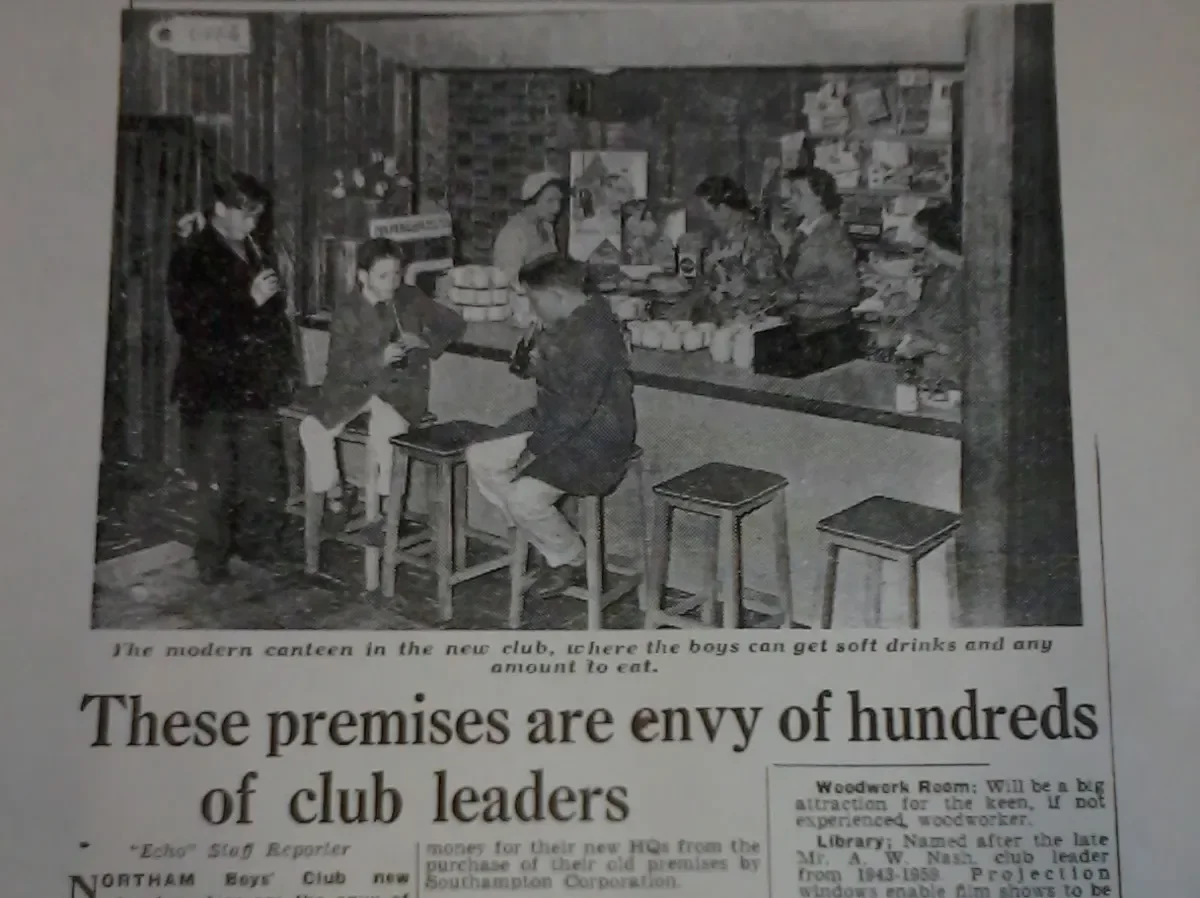
Between 2012 and 2013, a consultation was held in the area with representatives of local groups, service users, and two councillors.
With the threat of closure, it was framed as a dialogue between parties - a heartfelt, yet desperate attempt to appeal to the decision-makers.
In their official ePetition response, the council even described the consultation process as ‘a community based solution’.9
But when parents, youth workers, and past and present service users fulfilled their part - showing councillors around the venue, speaking to the crowd, and watching a select few young people deliver speeches - and, yet, the centre still shut its doors in April 2014, is it absurd enough to consider that the decision was already made?
That the two councillors were little more than lapdogs sent in to offer a veneer of respectability to what had always been a foregone conclusion?
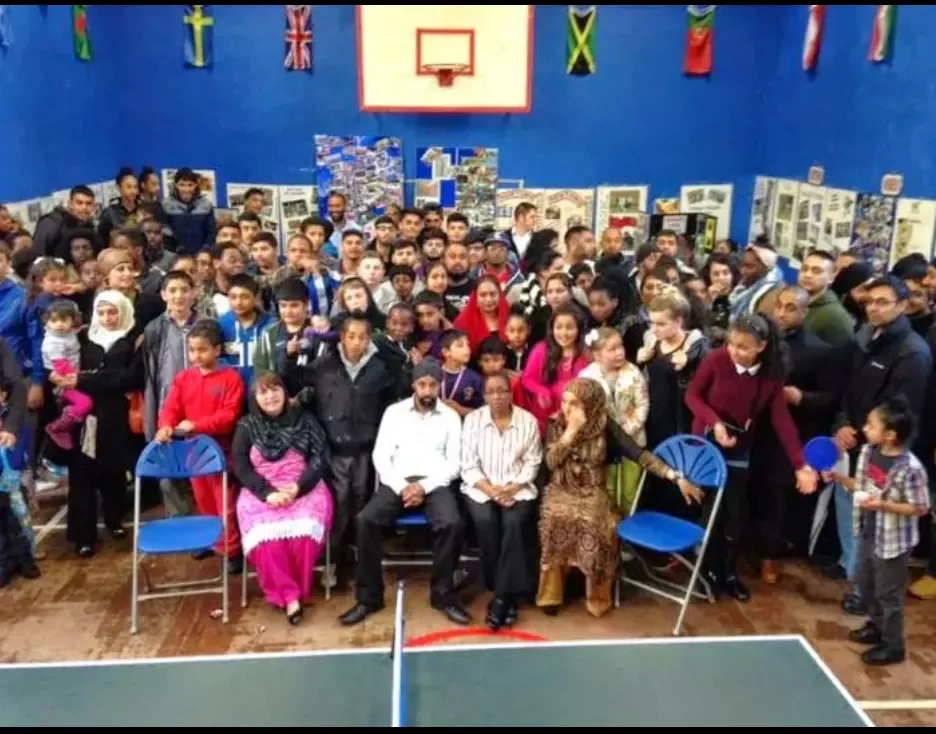
THE END OF A LEGACY
After forty years, ‘Boyzy’ had died.
The council’s redundancies of Sukhdev Rathore, Larry Kazingski, Parveen Ishfaq, Sal Resco Chitulu, Dionne Darbyshire, Rosh Bhatti, and Coreen Forbes—just to name a few—amounted to an exodus of role models and reference points for the youth.
And it hit like a death in the family.
Those 5 a.m. trips to Thorpe Park. The DJ nights. Strawberry picking. Football tournaments. Basketball shoot-outs. Bike rides through coastal towns. Visiting the beach for the first time. All given to us as heavily discounted trips, now suddenly felt like relics of a vanishing childhood.
Swept away like Ozymandias.
As Boyzy closed in the same year as our GCSEs, what little free-time we had in its absence was bulldozed by a grey, joyless tide of revision timetables and classroom clocks.
And as time funnelled into this newfound academia, a quiet wave of collective resignation passed over the boys of Newtown.
One by one, we sold our bikes.
And little did we know that, in doing so, we were selling what little remained of our childhood.
THE STUDY YEARS
To my fourteen-year-old mind, studying for subjects I had no interest in was akin to some Soviet experiment in psychological torture.
I could think of nothing worse than sitting in a classroom, or at home, having to recite the periodic table, memorise cholera outbreaks, or explain the mathematical order of BIDMAS.
My only concern was going out and having fun.
But with Boyzy now closed, and most of my Blyton-esque friends slowly becoming infected by this scholastic way of thinking, tucked away in their bedrooms, offline on PS3 for a week, and muttering pages of the CGP revision guide like a taoist monk, I knew that if I didn’t make a change, and quick, it wouldn’t be long until I, too, would be crushed under the heel of this prosaic way of living.
The streets of Newtown grew quieter. As though a malignant, child-snatching beast from Household Tales had blinked its way into our dimension and begun its annual spree of kidnapping boys of a certain age and lobotomising them in textbooks.
I didn’t want that.
I wanted something to shake me.
To grip me by the collar and throw me into the deep end.
And, as if conjured by some divine intervention, my prayer was answered.
At the end of a Year 9 Business Studies class, I overheard a conversation between my teacher, Miss Sutton, and a peer. What I eavesdropped on would become, unwittingly, my golden ticket out of this sinking ship: a “once-in-a-lifetime opportunity” to travel to a distant land, take part in a community project, trek through mountains, and immerse myself in a new culture.
It sounded promising.
Interesting.
Transformative, even.
And everything a fourteen-year old needed to bite his teeth into.
It was all good, theoretically.
But there was one glaring issue.
Each participant had one year to raise £3,495 - or the dream would dissolve.
And growing up in a single-parent household, where my mum kept every receipt, budgeted down to the penny, and could stretch a pound further than most could stretch a mile, I knew better than to expect a hand-out.
That money wasn’t coming from her.
And if I wanted to go, I needed to figure out a game-plan - and fast.
IT TAKES A VILLAGE
I sat on the bus, filing through compliments and rehearsing several elevator pitches with the intent of finding the right ones that would bypass my mum’s, at times, pensive dismissiveness.
When I reported back news of this prospective expedition to the chief-in-command, she didn’t even flinch.
“You can go”, she said plainly, “but you know you’re going to have to figure a way to raise the money yourself.”
Over the next nine months, the real expedition began.
Mr Evans was the new PE teacher at Cantell School - young, spry, and still fresh enough to believe in the job.
Twenty-five years old, but already a presence in the corridors, he walked with the kind of bounce you see in old war footage, like a man carrying orders he’d written himself.
He had a quick-witted, sarcastic sense of humour (common among British PE teachers), and, in just his first year at the school, showed no signs of being warped by timetables or five-year targets.
He was relatable to us Year 11s. And having been a teacher myself, I now know there’s a special kind of skill in still keeping your soul and flying just below the HR radar - edgy enough to make the students laugh, and subtle enough to not be called in on a Monday morning.
Mr Evans was that guy.
And yet, despite his short time at the school, he was chosen - unanimously I would later be told - to take over from Miss Herridge and Miss Sutton, the Assistant headteacher and Business Operations manager of the school, respectively, and co-facilitate, accompany, and be responsible for four high-school students heading on an expedition to the other side of the world.
Now, having one of the most popular teachers at the school take you on a two week trip to India either sounds like a dream or an alternative take to Todd Phillip’s Hangover.
Mr Evans saw something in me - some unfinished shape - and rather than lecture it into form, he gave it space. He listened. He asked questions and took me under his wing, giving me his undivided attention with my entrepreneurial endeavours.
Cake sales.
Movie nights.
Washing cars.
Christmas cards sold at the local church.
A world Cup sweepstake.
And even convincing an ice cream van to come to school on the last day of term - and, with the encouragement of Mr Evans approach him and negotiate a cut of his earnings - were some of the ways I chipped away at the £3495 that hung in the air like a taunt.
Bit by bit, the money started to flow in, and one afternoon, at the end of a PE class, Mr Evans, Miss Herridge and I headed to the SLT office to count up the money I had raised over the last year.
The once distant figure of £3495 had been reached.
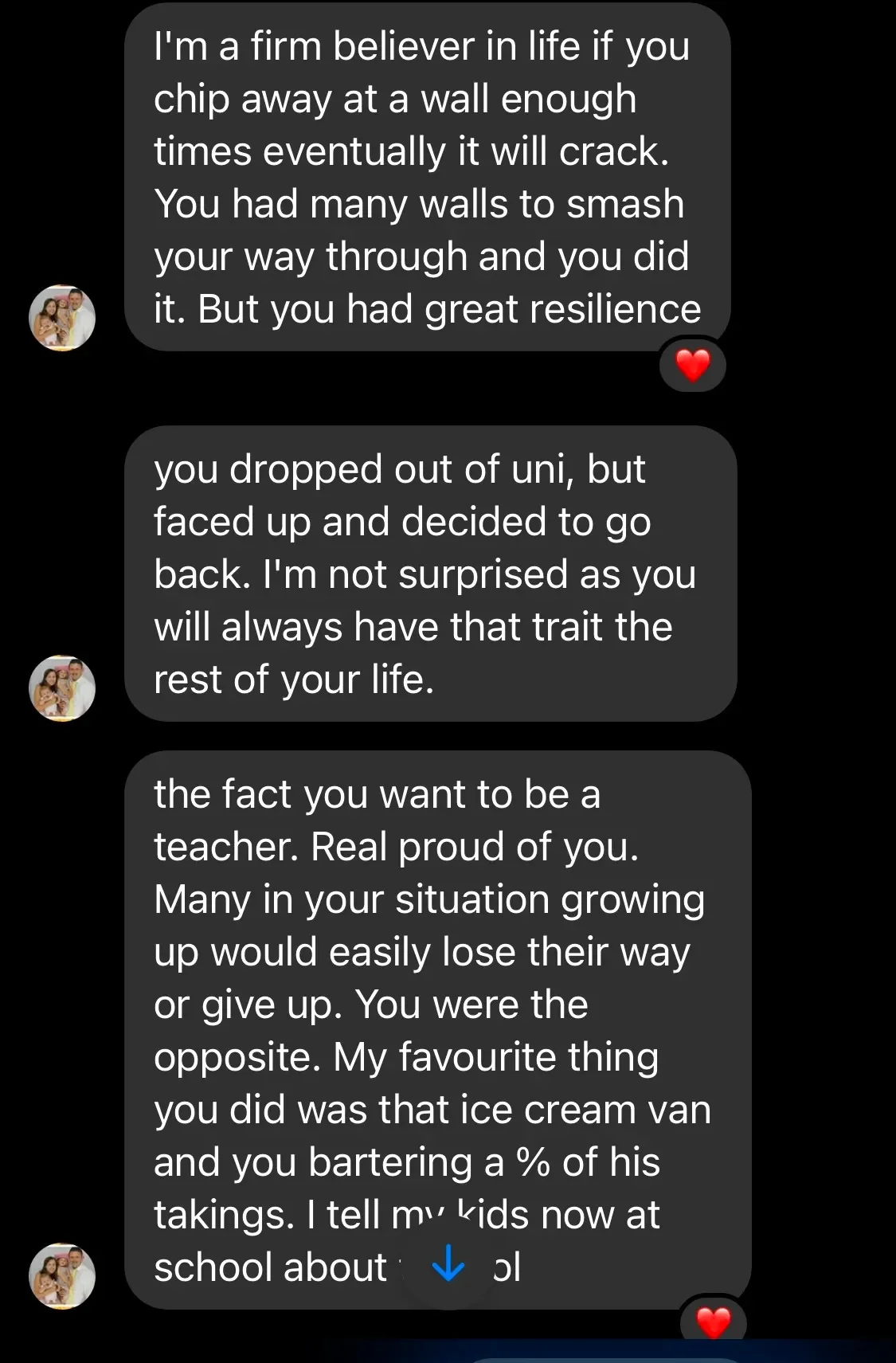
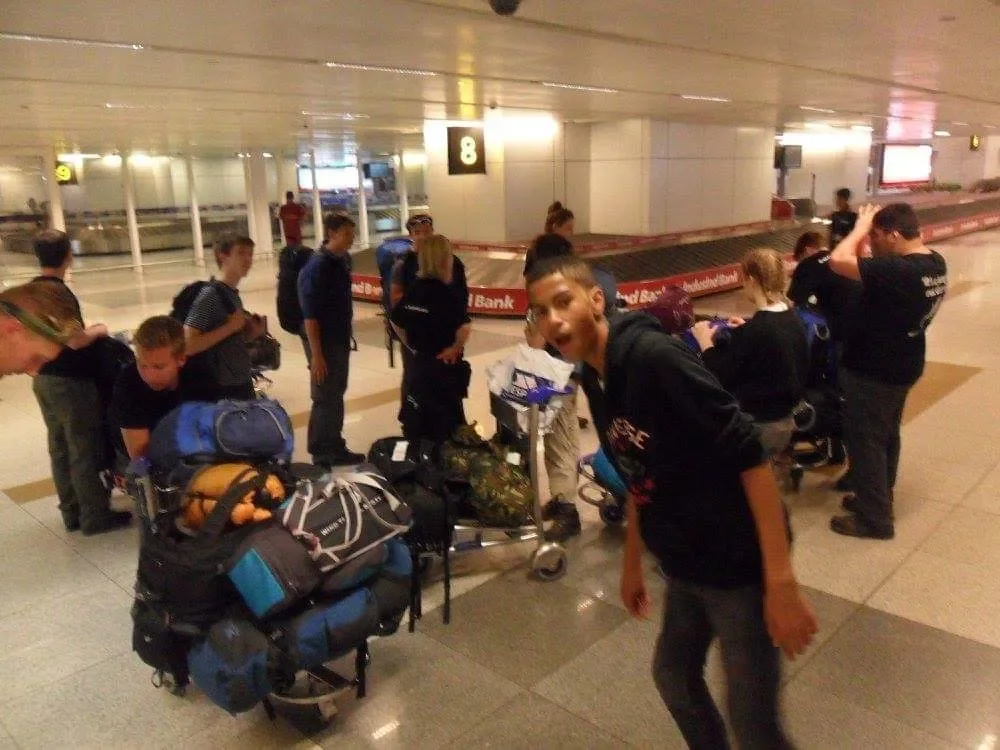
GCSE season is sacred in any British school - every assembly tends to be a sermon on focus, discipline, and projected futures. Yet I am fortunate to say that, although I was far from the ivory-league student, often caught day-dreaming in class, and doodling stick-figures in the margins of notebooks, my enthusiasms were never ridiculed, dampened or extinguished by the teachers of my school.
I was never sent to the head teacher’s office and given the cautionary tale of the boy who flew too close to the sun.
Instead they identified my passion and fed it.
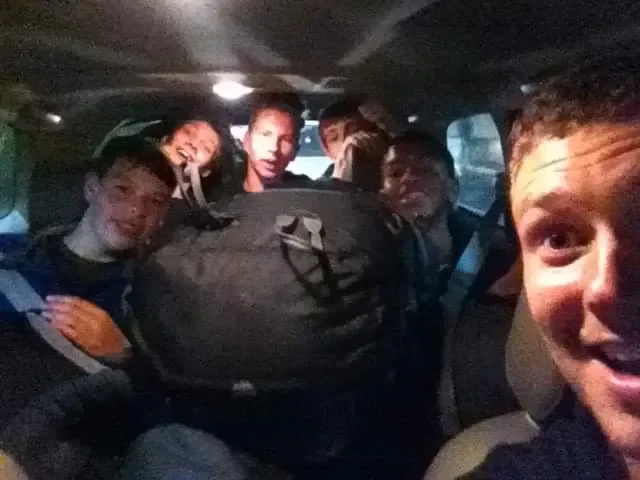
Mr Evans will drive me to London for my visa and passport, come to my house to meet my Mum, and when I still didn’t have my gear two weeks before take-off, he will get school approval and take me in his car on a shopping spree to Decathlon to get everything I need.
Ten years later, I still use the same mountain backpack we bought that day.
As I’ve grown older, I’ve come to realise just how rare that kind of support is.
In the inner city, the absence of real role models- people who see you and champion you - is a quiet pandemic. Even to those that see you, ambition, when misunderstood, can provoke hate amongst the wrong audience.
It is a tough world.
INTO THE HIMALAYAS
I have maybe a dozen photos from my time in India.
My mum bought me a cheap, pocket-sized camera a week before I left - one that stamped every shot with a bright yellow date. Most of those photos were lost, and somehow, in a case of irony, that’s served the experience well.
Photos may preserve the memory of a moment, but more often than not, they steal the chance to live in it.
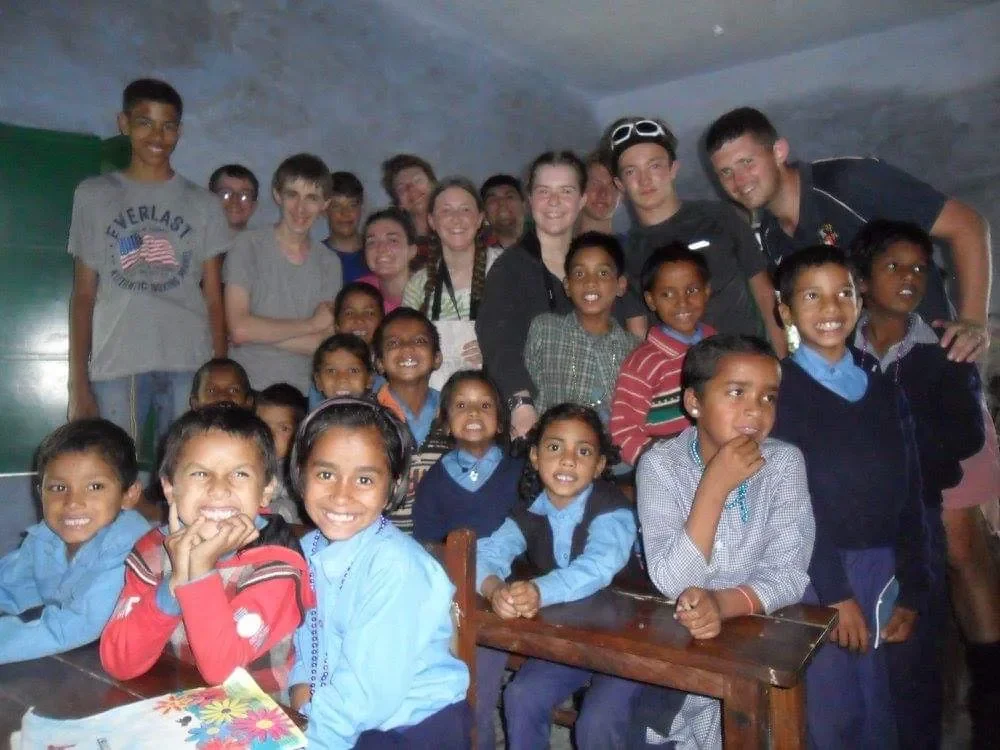
Every so often, fragments return - moments with Guruth, our guide; the 5 a.m. wake-ups and puffy faces; the belly laughter as we camped in cramped two-man tents deep in the Himalayas; the steep treks and the deep conversations; chai and Parle-G biscuits shared by the fire; wandering through a cannabis field; visiting an open-jeep tiger reserve, sleeping on the rattling sleeper train from New Delhi to Agra, and having the train station’s toilet door banged on by impatient Indian men as you squat over the cistern - a victim of relentless Delhi Belly.
It was an experience that gave me the tools I didn’t know I needed - tools laid down first by the youth workers in my community, the teachers at Cantell, and the belief that, as echoed in Robin William’s iconic monologue, on that bench in Boston Park Garden, we learn more about life through lived experience than we ever could from any book.
A FEW LESSONS LEARNED ALONG THE WAY…
Travel with the intent of becoming a global citizen - and discovering more about who you really are.
Richness isn’t in your bank balance. It’s in your connections, your courage, and the stories you collect.
You can feel empty in a high-rise condo and feel like royalty in a creaky hostel dorm full of strangers.
As Sting said:
“a man has a big house / a man’s got plenty money / a man’s got red wine to drink in the land of milk and honey / a man’s got a job / he’s got some status and self-respect / but a man’s never satisfied / what did he expect?”)10
Growth doesn’t always happen on the beach. It happens when you leave your village, venture into the woods, and do the thing that scares you.
You’re arguing with people who haven’t read a book (or anything that challenges their belief) since seventh grade. Sometimes, just smile and move on.
Some experiences are too sacred to share - at least not straight away. Let them marinate; Protect it.
You must be willing to play the fool before becoming the master.
Always remember that there are friends you are yet to meet, places you are yet to go, and opportunities yet to transpire - keep the faith.
Be tactful who you go to discuss problems. Some people will enflame the situation, whilst others will work to extinguish it.
Being admired doesn’t mean you’re doing right. Being hated doesn’t meant you’re doing wrong.
You don’t need to know all the details.
I dismiss the idea of a 'once-in-a-life-time opportunity’. There’s a couple reasons. a. what is for you will always find you if you’re putting in the work and b. what you think you’re looking for may appear in the form of something entirely unexpected.
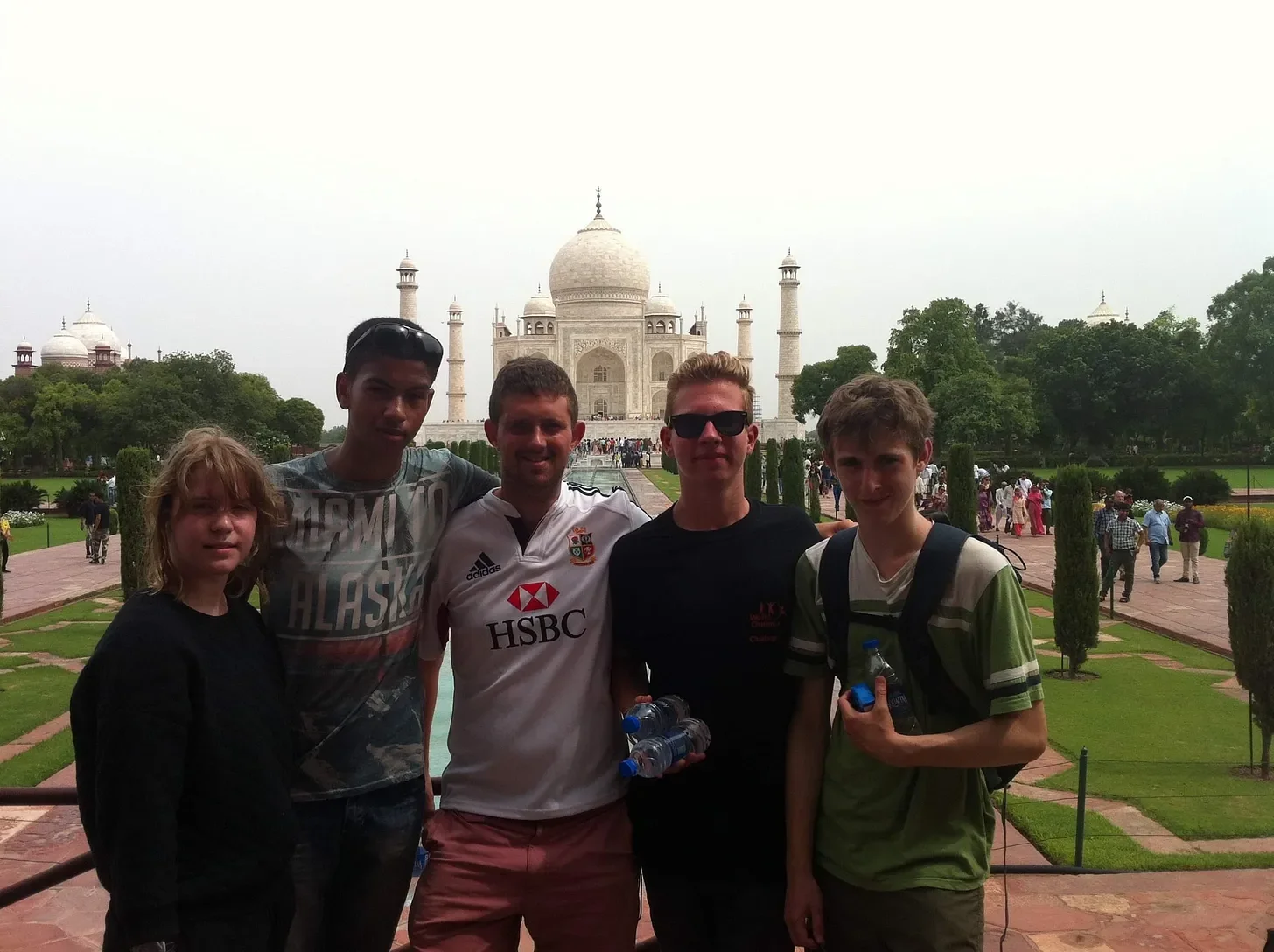
Here’s to ten more years of wandering, wondering, and walking paths we never expected to find.
Kamal ✊
BIBLIOGRAPHY
Kenneth Grahame, The Wind in the Willows, “The River Bank,” (London: Penguin Classics, 1908), 1.
2. ‘Our Portrait Gallery: Mr. Junior Bailiff Jonas Nichols. The Southern Reformer, October 9th 1880. Page 2.
3. ‘Our Portrait Gallery: Mr. Junior Bailiff Jonas Nichols. The Southern Reformer, October 9th 1880. Page 2.
4. “Inner-City Pride Restored,” Southern Daily Echo, July 5, 2004, https://www.dailyecho.co.uk/news/5570644.inner-city-pride-restored/.
5. “Inner-City Pride Restored,” Southern Daily Echo, July 5, 2004, https://www.dailyecho.co.uk/news/5570644.inner-city-pride-restored/.
6. “Inner-City Pride Restored,” Southern Daily Echo, July 5, 2004, https://www.dailyecho.co.uk/news/5570644.inner-city-pride-restored/.
7. Yasmin Rosita Kelly, “My Street” (unpublished reflective essay, 1987)
8. Chinua Achebe, Things Fall Apart (New York: Anchor Books, 1994)
9. ‘ePetition details: Newtown Youth Centre’, 14th April 2016, Southampton City Council, https://www.southampton.gov.uk/modernGov/mgEPetitionDisplay.aspx?ID=500000028&RPID=0&HPID=0
10. Sting and Shaggy, "If You Can’t Find Love," track 13 on 44/876 (A&M Records, 2018), streaming audio.
